Building the Right Team Around Your Career
Opening Perspective
One of the questions I ask every athlete isn’t about football.
It isn’t about contracts.
It isn’t about money.
I simply ask:
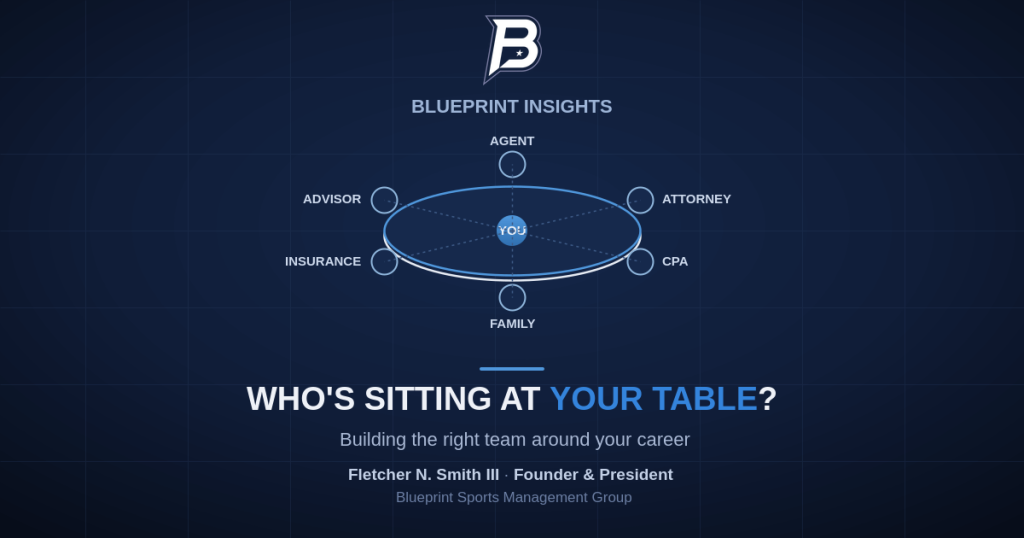
“Who’s sitting at your table?”
Not literally.
I mean…who do you trust when you’re making important decisions?
Who challenges your thinking? Who explains what you don’t understand? Who is willing to tell you something you may not want to hear?
Over nearly three decades representing athletes, coaches, and executives, I’ve learned that careers are rarely shaped by one decision. They’re shaped by the people involved in making those decisions.
The right advisory team won’t make every decision for you, but they’ll help you make better ones.
Every Great Athlete Has a Team
No athlete reaches the highest levels alone. Coaches, trainers, medical professionals, and mentors all contribute to success. The business side of your career deserves the same intentional approach.
Every Advisor Has a Different Responsibility
Your Agent
Identifies opportunities, negotiates contracts, coordinates strategy, and advocates on your behalf.
Your Attorney
Provides legal advice, reviews agreements, protects your legal interests, and helps manage legal risk.
Your CPA
Helps with taxes, reporting obligations, estimated payments, and financial recordkeeping.
Your Financial Advisor
Assists with long-term financial planning, budgeting, investing, and wealth preservation.
Insurance Professionals
Help protect you and your family against financial risk.
Family
Provides support, perspective, and values that often shape the most important decisions.
Your Advisors Should Work Together
The best advisors don’t compete with one another, they collaborate.
When your agent, attorney, CPA, financial advisor, and other professionals communicate effectively, you’re better positioned to make informed decisions and avoid unnecessary surprises.
Sometimes the Best Advice Is the Advice You Don’t Want to Hear
One of the responsibilities I take most seriously is being honest with my clients.
Sometimes that means encouraging them to slow down before making an important decision.
Sometimes it means recommending they pass on an opportunity that looks attractive today but doesn’t align with their long-term goals.
Good advisors don’t simply tell clients what they want to hear.
They tell them what they need to hear.
Honest conversations build trust.
Trust builds lasting relationships.
Beware of Conflicts of Interest
Ask yourself:
• Is this recommendation in my best interest?
• Has anyone explained the potential downside?
• Am I being encouraged to ask questions?
• Is anyone rushing me to make a decision?
Trust should be earned through transparency, communication, and sound judgment.
Questions to Ask Before Hiring Any Advisor
☐ How are you compensated?
☐ What experience do you have with athletes in situations similar to mine?
☐ How often will we communicate?
☐ Will I work directly with you?
☐ How do you coordinate with attorneys, CPAs, financial advisors, and other professionals?
☐ Who else will be involved in my representation?
☐ How do you handle disagreements among advisors?
☐ What do you expect from me as a client?
☐ Can you provide references or examples of how you’ve helped clients navigate difficult decisions?
Common Mistakes I See
Trying to Do Everything Alone
Successful careers are built with trusted advisors.
Depending on One Person for Everything
No one professional should be expected to fill every role.
Confusing Familiarity with Expertise
Someone can care deeply about you without having expertise in every area.
Failing to Communicate
The best outcomes occur when advisors work together.
Blueprint Perspective
Throughout my career, I’ve never believed my responsibility was simply to negotiate contracts.
My responsibility has always been to help clients make better decisions.
Sometimes that involves negotiating.
Sometimes it involves listening.
Sometimes it involves saying no.
Sometimes it means helping clients assemble the right team around them.
No single advisor has every answer.
The strongest careers are built when experienced professionals communicate, collaborate, and remain focused on one objective: helping the athlete succeed, not only today, but long after the final game has been played.
The people sitting at your table will influence many of the most important decisions of your career.
Choose them wisely.
Blueprint Takeaways
- Build your advisory team intentionally.
- Understand each advisor’s role.
- Encourage communication among your advisors.
- Don’t confuse loyalty with expertise.
- The right people around you often become your greatest competitive advantage.
About the Author
Fletcher N. Smith III is the Founder and President of Blueprint Sports Management Group. An attorney and NFLPA-certified contract advisor with nearly three decades of experience, Fletcher advises professional and collegiate athletes, coaches, executives, and families on contract negotiations, NIL strategy, career development, and long-term planning.