What Every Athlete and Family Should Know Before the First Payment Arrives
Opening Perspective
One of the most rewarding moments in an athlete’s career is receiving the first meaningful payment for years of hard work.
It’s exciting. It should be.
Whether that payment comes through an NIL agreement, a revenue-sharing arrangement, a marketing partnership, or another opportunity, it represents years of dedication and sacrifice.
But over the years, I’ve learned that one of the most important conversations doesn’t happen when the payment arrives. It happens after.
That’s because earning money and managing money are two very different skills.
The opportunity isn’t simply to earn income. The opportunity is to build habits that protect it.
Understanding Athlete Compensation
Today’s athletes may receive compensation from revenue-sharing agreements, NIL agreements, endorsements, licensing, appearances, camps, speaking engagements, autograph sessions, and other opportunities. Each form of compensation may involve different contractual obligations, payment structures, and tax considerations.
Understanding Your Compensation
Unlike a traditional paycheck, NIL compensation may not include automatic tax withholding. Athletes and families should never assume that taxes have already been deducted from a payment. Understanding how compensation is structured, and planning accordingly, is an important part of protecting what you’ve earned.
Different forms of compensation may be treated differently. Understanding how each payment is characterized before you sign an agreement can help you ask better questions and avoid unnecessary surprises later.
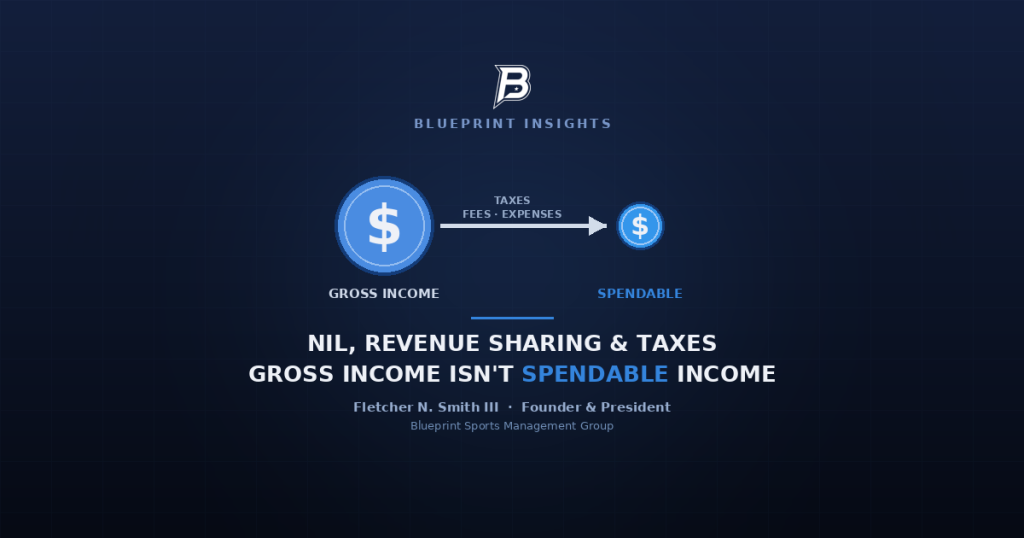
Gross Income Isn’t Spendable Income
One of the easiest mistakes to make is believing you’ve earned more than you actually have available to spend. Before making major purchases, understand taxes, professional fees, business expenses, and future obligations. Learning the difference between gross compensation and net spendable income is one of the first financial lessons every athlete should master.
Should Every Athlete Form an LLC?
Not necessarily. The right decision depends on your individual circumstances, including income, business activities, liability, tax implications, and long-term goals. Consult qualified legal and tax professionals before making that decision.
Build the Right Advisory Team
Agent
Negotiates contracts and helps guide career decisions.
Attorney
Reviews agreements and protects legal interests.
Certified Public Accountant (CPA)
Assists with tax planning and compliance.
Financial Advisor
Helps with budgeting, investing, and long-term planning.
Insurance Professional
Protects against financial risks.
Business Manager
Coordinates day-to-day financial matters as opportunities grow.
The strongest advisory teams communicate with one another and keep the athlete’s long-term interests at the center of every decision.
Don’t Build Your Financial Team One Crisis at a Time
Don’t wait until tax season to find a CPA. Don’t wait until a contract dispute to hire an attorney. Don’t wait until a major investment opportunity to find a financial advisor.
Build your team before you need your team. Preparation almost always leads to better decisions than reaction.
Blueprint Tax & Financial Planning Checklist
☐ Understand where my compensation comes from.
☐ Know whether taxes have been withheld.
☐ Speak with a qualified CPA or tax professional.
☐ Set aside money for taxes.
☐ Keep copies of every agreement.
☐ Track income throughout the year.
☐ Maintain organized financial records.
☐ Discuss whether an LLC makes sense.
☐ Understand multi-state tax considerations.
☐ Build the right advisory team.
Common Mistakes I See
Spending Before Planning
The excitement of receiving income should never replace thoughtful planning.
Waiting Until Tax Season
Tax planning should begin when the first payment arrives.
Following Generic Advice
Base decisions on your circumstances, not social media.
Trying to Do Everything Alone
Preparation includes building the right team.
Blueprint Perspective
One of the greatest advantages today’s athletes have is the opportunity to develop financial discipline early.
Income creates opportunity.
Good habits create wealth.
Protecting what you’ve earned is every bit as important as earning it.
Blueprint Takeaways
- Understand how each form of compensation is structured.
- Never assume taxes have already been withheld.
- Learn the difference between gross income and spendable income.
- Build your advisory team before you need it.
- Financial success begins with good habits, not large contracts.
About the Author
Fletcher N. Smith III is the Founder and President of Blueprint Sports Management Group. An attorney and NFLPA-certified contract advisor with nearly three decades of experience, he advises professional and collegiate athletes, coaches, executives, and families on contract negotiations, NIL strategy, career development, and long-term planning.
Disclaimer
This article is intended for educational purposes only and should not be construed as legal, tax, accounting, or financial advice. Consult qualified professionals regarding your specific circumstances.